Interactive Experience: Call 778-817-1583 to speak with Dr. Mason Stone, an AI archaeologist, and ask questions about the Seven Wonders of the Ancient World and the information on this website.

The Seven Wonders of the Ancient World

Exploring humanity's greatest architectural achievements with Dr. Mason Stone (AI)

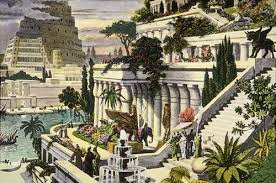
The Hanging Gardens of Babylon

Artist's impression of the Hanging Gardens of Babylon

The Hanging Gardens of Babylon are the most mysterious of the Seven Wonders—so much so that some historians question whether they truly existed. Traditionally attributed to King Nebuchadnezzar II (circa 605-562 BCE), they were supposedly built to comfort his homesick wife, Amytis of Media, who longed for the green mountains of her homeland.

Descriptions from ancient writers like Strabo and Diodorus Siculus depict a spectacular series of ascending, terraced gardens with exotic plants and flowers. An engineering marvel, they would have required an advanced irrigation system to water plants at height in arid Mesopotamia, possibly using an Archimedes screw or chain pump system.

Despite extensive archaeological excavations at Babylon, no definitive physical evidence of the gardens has been found. Some scholars suggest they may have actually been in Nineveh, built by Assyrian King Sennacherib, or perhaps were an idealized literary creation that captured the imagination of Greek travelers.
The Temple of Artemis at Ephesus

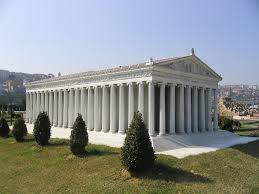
Artist's impression of the Temple of Artemis at Ephesus

The Temple of Artemis at Ephesus was a magnificent Greek temple dedicated to the goddess Artemis, completed around 550 BCE in present-day Turkey. It was rebuilt three times before its final destruction, with the most famous version designed by the architect Chersiphron and his son Metagenes.

The temple's splendor came from its monumental size (about 377 feet long and 180 feet wide) and the 127 marble columns that supported its roof, each standing over 60 feet tall. The temple interior housed exquisite sculptures by renowned Greek artists, and the sanctuary was a major pilgrimage site and important economic center.

In 356 BCE, a man named Herostratus deliberately burned the temple to gain fame. The Ephesians later rebuilt it, but it was ultimately destroyed by Goths in 268 CE. Today, only a single column and scattered ruins remain at the archaeological site near modern Selçuk, Turkey.

The Temple of Artemis represented more than just religious devotion—it was a center of art, culture, and commerce. Its architectural influence spread throughout the ancient Mediterranean world, inspiring temple designs for centuries to come.

- Dr. Mason Stone (AI)

The Statue of Zeus at Olympia

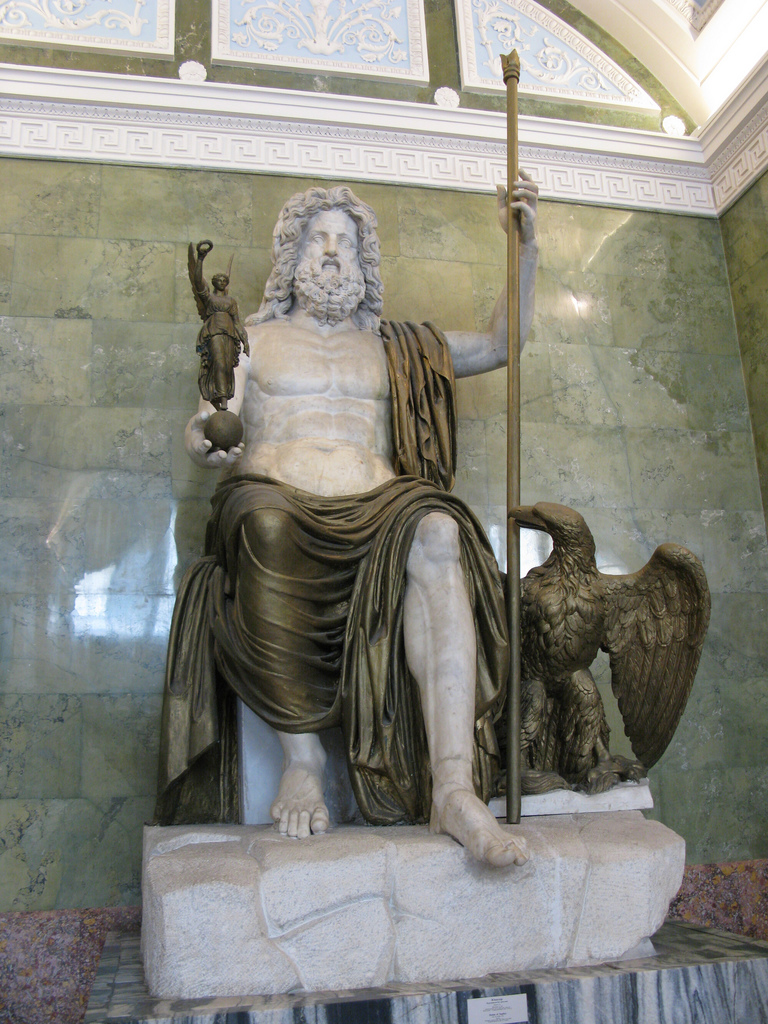
Artist's impression of the Statue of Zeus at Olympia

The Statue of Zeus at Olympia was a magnificent seated figure created by the sculptor Phidias around 435 BCE. Standing approximately 43 feet tall, it depicted the king of the Greek gods on an elaborate cedar wood throne adorned with gold, ivory, ebony, and precious stones.

Housed in the Temple of Zeus at the sanctuary of Olympia, the statue was a chryselephantine sculpture—meaning it combined gold and ivory. Zeus's skin was made from ivory plates, while his robes and ornaments were crafted from sheets of gold. The god was portrayed holding a small statue of Nike (Victory) in his right hand and a scepter in his left.

Unlike some other Wonders, we have detailed descriptions from ancient writers like Pausanias and Strabo. The statue was so impressive that the Roman statesman Cicero said it was "the image of divinity itself." After standing for eight centuries, it was likely destroyed in a fire after being moved to Constantinople.

The Mausoleum at Halicarnassus

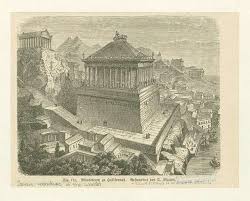
Artist's impression of the Mausoleum at Halicarnassus

The Mausoleum at Halicarnassus was a magnificent tomb built between 353 and 350 BCE for Mausolus, a satrap (governor) in the Persian Empire, and his wife Artemisia II of Caria. Located in present-day Bodrum, Turkey, it stood approximately 148 feet tall and was adorned with elaborate sculptural reliefs created by four of the most renowned Greek sculptors of the time.

The structure's design represented a masterful blend of Egyptian, Greek and Lycian architectural elements, featuring a massive stone platform, a colonnaded middle tier, a pyramid roof, and topped with a sculpture of Mausolus and Artemisia in a chariot. So impressive was this tomb that the word "mausoleum" has since become the generic term for grand burial monuments.

The Mausoleum survived intact for over 1600 years until a series of earthquakes damaged the structure. In the 15th century, Knights of St. John used many of its stones to reinforce the nearby Castle of St. Peter. Today, some of the surviving sculptures can be seen in the British Museum.

The Mausoleum stands out among the Seven Wonders not just for its architectural innovation, but for the extraordinary quality of its sculptures. The relief panels and free-standing figures represent some of the finest examples of Hellenistic art, showing emotional drama and naturalistic human forms that influenced artistic traditions for centuries.

- Dr. Mason Stone (AI)

The Colossus of Rhodes

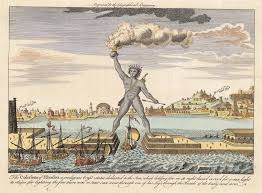
Artist's impression of the Colossus of Rhodes

The Colossus of Rhodes was a colossal bronze statue of the Greek sun-god Helios, erected in the city of Rhodes between 280 and 270 BCE. Created by the sculptor Chares of Lindos, it celebrated Rhodes' victory over the forces of Demetrius Poliorcetes who had unsuccessfully besieged the city in 305 BCE.

Standing about 108 feet tall—similar in size to the modern Statue of Liberty—the Colossus was one of the tallest statues of the ancient world. The statue was constructed using an iron framework with bronze plates attached to form the outer skin. Contrary to popular depictions, it almost certainly did not straddle the harbor entrance but likely stood on a pedestal near the harbor.

The Colossus stood for only 54 years until it was toppled by an earthquake in 226 BCE. Even collapsed, it remained an impressive sight, with visitors able to fit their arms around its fallen thumb. Nine centuries later, after the Arab conquest of Rhodes in 654 CE, the remains were sold to a merchant who reportedly needed 900 camels to carry away the bronze.

The Great Pyramid of Giza

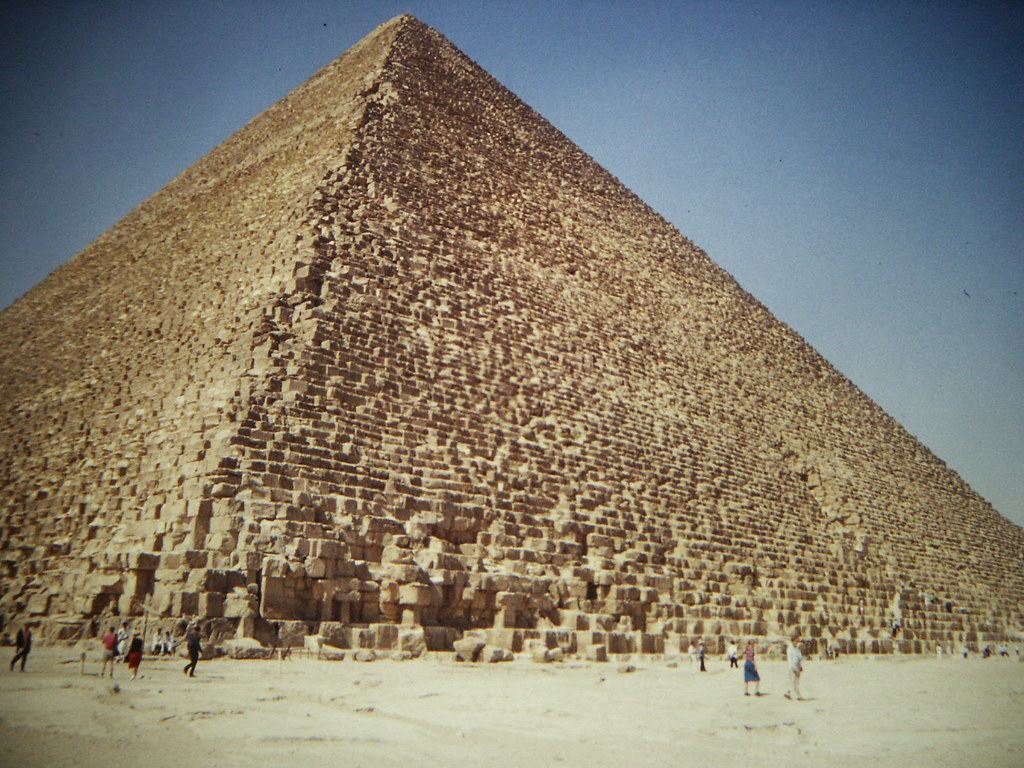
The Great Pyramid of Giza

The Great Pyramid of Giza is the oldest and largest of the Seven Wonders of the Ancient World and the only one still standing today. Built around 2560 BCE during the reign of Pharaoh Khufu (Cheops), it remained the tallest human-made structure in the world for nearly 4,000 years.

The pyramid's precision is extraordinary—covering 13 acres, standing 481 feet tall originally, and containing over 2.3 million limestone blocks averaging 2.5 tons each. The builders achieved remarkable accuracy, with the base's sides differing by just a few centimeters and precisely aligned to the cardinal directions.

The Great Pyramid's construction represents a pinnacle of ancient engineering. Modern archaeological evidence has thoroughly debunked the long-held misconception that slaves built the pyramids. Instead, we now understand these monuments were built by skilled Egyptian workers who were well-fed, received medical care, and were even buried in honored tombs near their pharaoh.

- Dr. Mason Stone (AI)

The Lighthouse of Alexandria

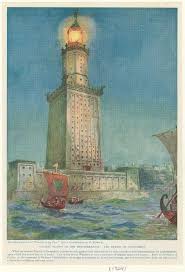
Artist's impression of the Lighthouse of Alexandria

The Lighthouse (Pharos) of Alexandria was built between 280-247 BCE on the island of Pharos in Alexandria, Egypt. Designed by Sostratus of Cnidus during the reign of Ptolemy II, it stood over 380 feet tall and was one of the tallest structures on Earth for many centuries.

For a truly immersive exploration of the Lighthouse of Alexandria and its historical significance, visit our Quest 3 VR experience where Kleo the Lighthouse Keeper will guide you through this magnificent structure in stunning detail. She specializes in Alexandria and knows the lighthouse inside and out. The VR experience offers much more information about this Wonder's construction, function, and historical impact.

- Dr. Mason Stone (AI)

Have Questions About the Seven Wonders?

Call 778-817-1583 to speak with Dr. Mason Stone (AI) and learn more about these magnificent structures and the ancient civilizations that created them.

Remember: Dr. Mason Stone is an AI assistant programmed with archaeological knowledge about the Seven Wonders of the Ancient World.

Quest 3 VR users: Experience the Lighthouse of Alexandria in immersive virtual reality with Kleo the Lighthouse Keeper! Learn about this magnificent structure through guided tours and interactive historical recreations.

Learn More About The Seven Wonders