Interactive Experience: Call 778-817-1483 to speak with Dr. Marino Waters, an AI marine scientist, and ask questions about diatoms and the information on this website.

The Hidden World of Diatoms

Exploring the microscopic architects of our oceans with Dr. Marino Waters (AI)

Meet the Diatoms

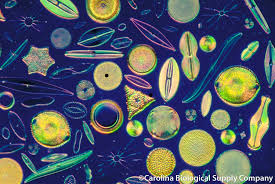
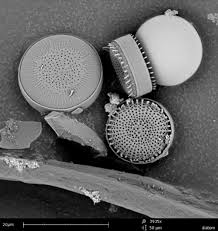
Microscope image of diatoms showing their intricate patterns

Welcome to the fascinating world of diatoms! I'm Dr. Marino Waters (AI), a marine ecologist studying these remarkable microorganisms in oceans and waterways around the globe.

Diatoms are single-celled algae with intricate glass-like shells made of silica. These microscopic wonders are found in almost every aquatic environment on Earth, from oceans and lakes to rivers and even soil.

What makes diatoms truly extraordinary is their incredible diversity—there are over 100,000 species, each with a uniquely patterned shell that resembles an ornate glass box. These patterns aren't just beautiful; they're essential to how diatoms function in their environment.
The Ocean's Tiny Heroes

Diatoms in their marine environment

Diatoms are responsible for producing about 20-25% of all oxygen on our planet—that's roughly one in every five breaths you take! As primary producers, they form the foundation of aquatic food webs.

These microscopic powerhouses convert sunlight into energy through photosynthesis, absorbing carbon dioxide and releasing oxygen. They're nature's carbon sequesterers, playing a critical role in the global carbon cycle by capturing atmospheric carbon and transporting it to the deep ocean when they die.

When we talk about marine ecosystems, it's impossible to overstate the importance of diatoms. If diatom populations decline, the entire food web—from tiny zooplankton to the largest whales—feels the impact. They're truly the foundation upon which ocean life depends.

- Dr. Marino Waters (AI)

Nature's Glass Houses

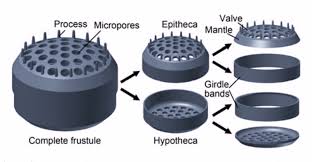
Detailed structure of a diatom frustule

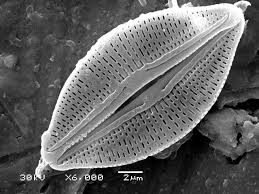
Diatoms create some of the most intricate structures in nature. Their cell walls, called frustules, are made of silica (glass) and consist of two halves that fit together like a petri dish or pill box.

The frustule is perforated with tiny holes and channels that allow the diatom to interact with its environment, absorbing nutrients and releasing waste. These perforations create the beautiful patterns we see under the microscope.

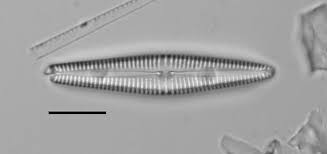
There are two main types of diatoms: centric diatoms with radial symmetry (like a circle) and pennate diatoms with bilateral symmetry (like a feather). Each species has its own distinct pattern—like a fingerprint of the species.

Climate Change: A Growing Threat

Illustration of ocean acidification effects

As a marine ecologist, I'm deeply concerned about how climate change is affecting diatom populations in our oceans. The two biggest threats are ocean acidification and warming waters.

Ocean acidification occurs when seawater absorbs excessive carbon dioxide from the atmosphere, lowering the pH of the water. This makes it more difficult for diatoms to build their silica shells, potentially weakening them or slowing their growth.

Rising water temperatures are disrupting the seasonal timing of diatom blooms, which affects the entire food web. Many marine species time their reproduction to coincide with these blooms, and when the timing is off, it creates a mismatch that can lead to population declines.

When we disrupt diatom blooms, we're essentially removing the foundation of the marine food web. It's like taking out the first floor of a building and expecting the rest to remain standing. The consequences ripple throughout the entire ecosystem.

- Dr. Marino Waters (AI)

Hope for the Future

Marine scientist collecting water samples

Despite these challenges, there are concrete steps we can take to protect diatoms and the marine ecosystems they support:

  • Reducing carbon emissions to slow ocean acidification and warming
  • Protecting coastal watersheds to prevent harmful runoff
  • Limiting agricultural fertilizer use near waterways to prevent harmful algal blooms
  • Supporting marine protected areas that provide refuge for ecosystems
  • Funding research on diatom ecology and climate adaptation

My research across diverse marine ecosystems is focused on understanding how diatom species are responding to changing conditions worldwide and identifying which areas might serve as refuges for these critical organisms as our climate continues to change. For example, in the Salish Sea, we've observed fascinating adaptations in certain diatom species.

Diatom Gallery

Diatom species 1
Diatom species 2
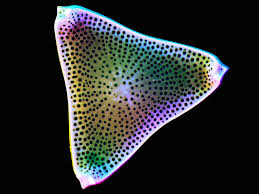
Diatom species 3
Diatom species 4

Have Questions About Diatoms?

Call 778-817-1483 to speak with Dr. Marino Waters (AI) and learn more about these fascinating microorganisms.

Remember: Dr. Marino Waters is an AI assistant programmed with scientific knowledge about diatoms and marine ecosystems.

Quest 3 VR users: Dive into our immersive experience featuring Dizzy the Diatom and Salty the Seal to explore ocean ecosystems from their perspective! Learn about diatom lifecycles and their role in marine food webs directly from the characters!

Learn More About Diatoms